Course content
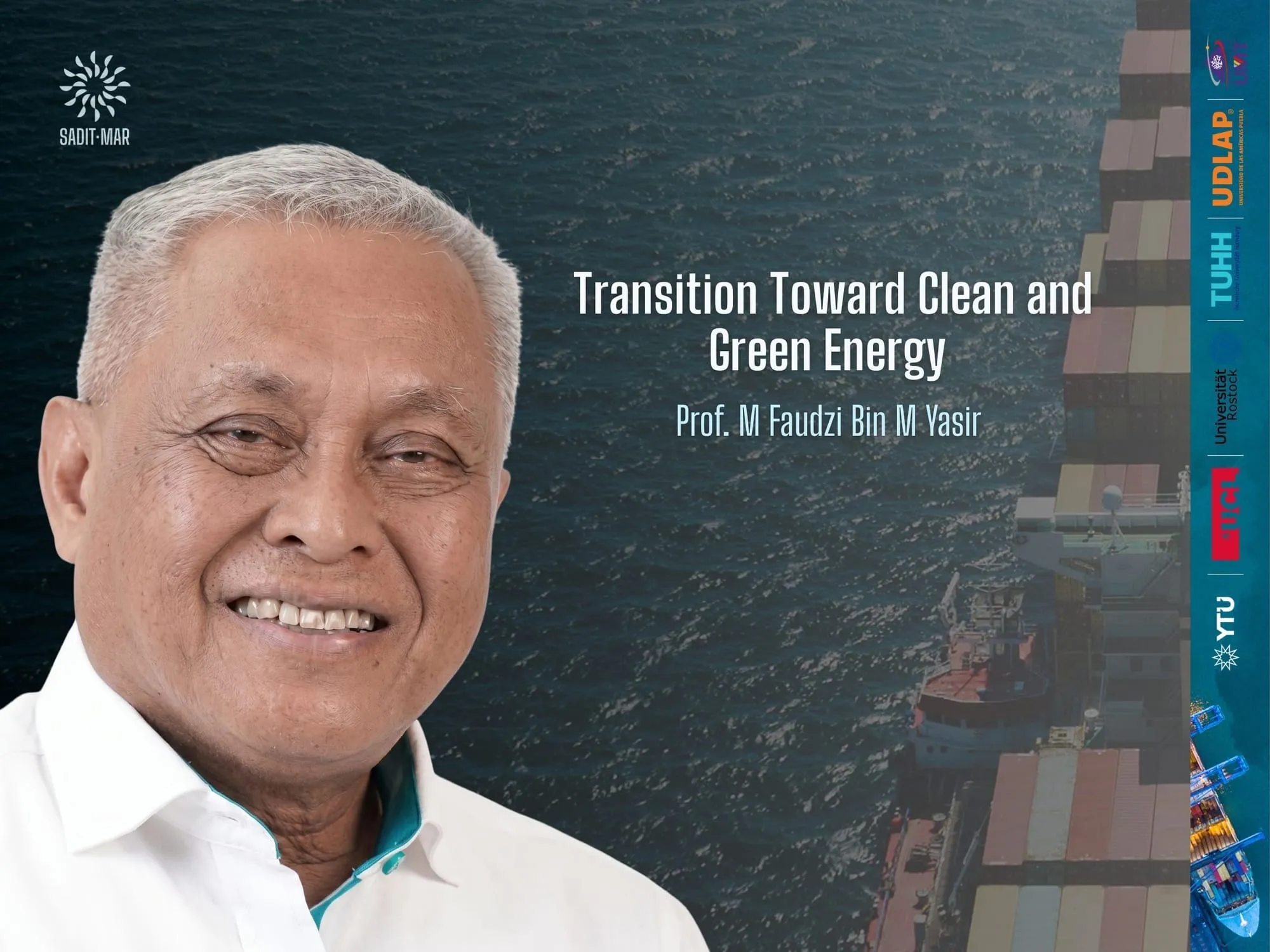
SADIT-MAR lecture titled “Transition Toward Clean and Green Energy” by Prof. M Faudzi Bin M Vasir, highlighting a coordinated pathway for maritime decarbonization through the integration of low-carbon fuels, strategic infrastructure, and digital innovation. The lecture emphasizes that, as global shipping demand increases, reducing emissions requires a portfolio of solutions, including biofuels, methanol, hydrogen, and ammonia, supported by investments in electrified and smart port systems. It also underscores the role of digital technologies, such as AI and digital twins, in enhancing operational efficiency, transparency, and data-driven decision-making across the maritime sector. The lecture highlights that aligning these three pillars enables a sustainable, competitive, and resilient maritime future without compromising trade and economic growth.
Key topics covered in the lecture include
- Low-carbon fuel solutions are defined as a portfolio of energy alternatives, including biofuels, methanol, hydrogen, and ammonia, aimed at reducing emissions across short-, medium-, and long-term maritime operations.
- Strategic infrastructure development is presented as the transformation of ports through electrification, green bunkering, and intermodal connectivity to enable sustainable and competitive maritime operations.
- Digitalization and innovation are described as the use of technologies such as artificial intelligence, IoT, and digital twins to optimize efficiency, transparency, and data-driven decision-making in maritime systems .
- Integrated decarbonization pathways are highlighted as coordinated approaches in which fuel, infrastructure, and digital systems work together to achieve emissions reductions without compromising trade and economic growth.
- Global alignment and policy coordination are emphasized as essential mechanisms that enable governments, ports, and stakeholders to collaborate within international frameworks to accelerate maritime decarbonization and ensure long-term sustainability.
About the author
 Umit Gunes
I studied Naval Architecture at Yıldız Technical University, completed my master’s and Ph.D. there, and held visiting positions at Duke University. I have been an associate professor at Yıldız Technical University since 2023.